Specifiche
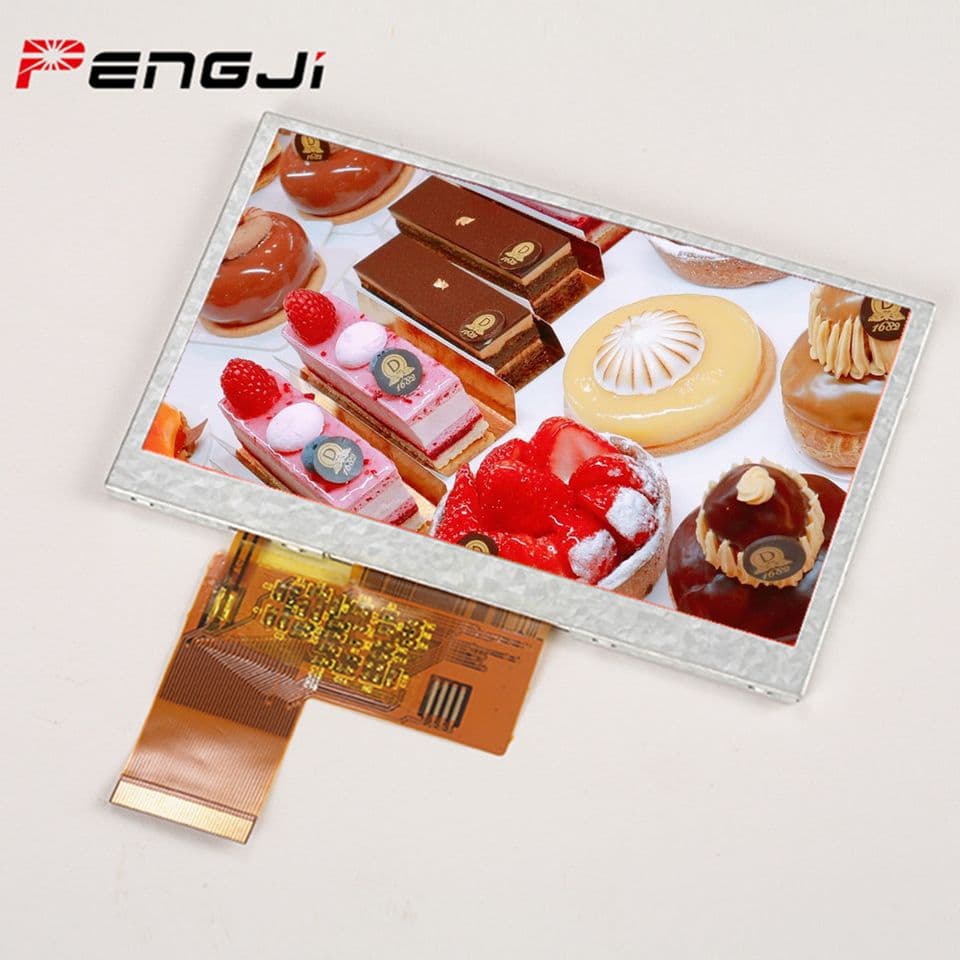
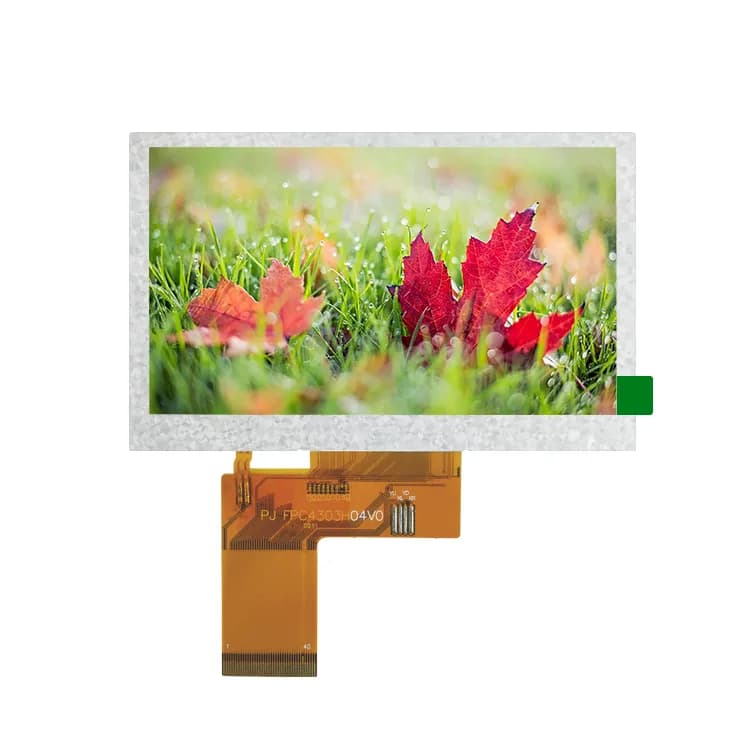
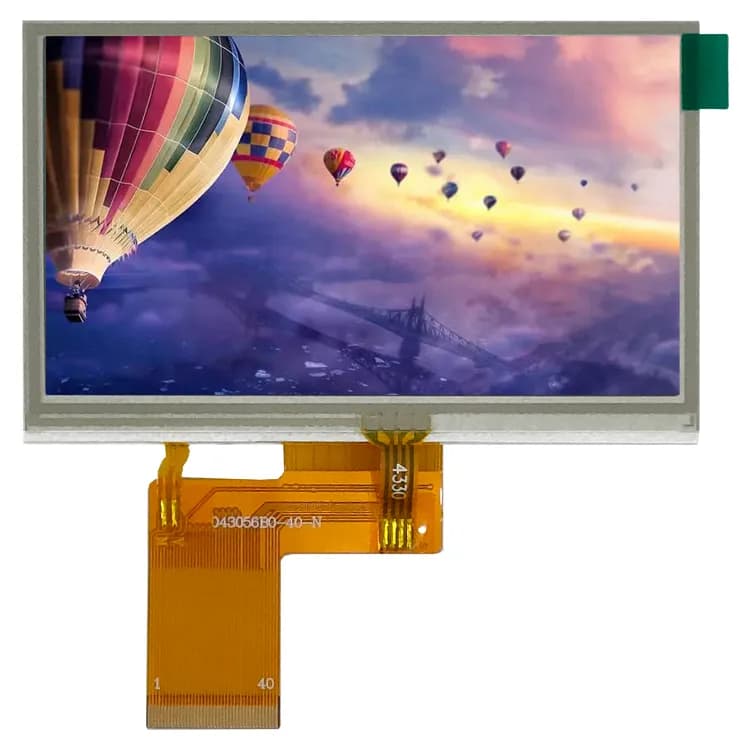
| Diagonale | 4.3" |
|---|---|
| Risoluzione | 480×272 |
| Tipo di pannello | TN |
| Interfaccia | RGB (parallelo) |
| Touch | Nessuno |
| Luminosità | 500 cd/m² (nits) |
| Colori | 16.7M |
| Temp. di esercizio | da -20 a +70 °C |
| Ingombro (mm) | 105.5×67.2×3.0 |
| FPC / connettore | 40-pin · 0.5 mm FPC |
| Tensione di alimentazione | 3.3V |
Note di ingegneria
Why 480×272 is still popular
A 480×272 frame is small enough for MCUs with modest external SDRAM or PSRAM, and the 9 MHz-class pixel clock is easy to route. That makes this panel a reliable choice for cost-sensitive HMIs.
Connecting to STM32 LTDC
Configure the LTDC with the horizontal/vertical sync, back-porch and front-porch values from the datasheet. For 16-bit designs, wire the panel’s upper colour bits and tie the unused LSBs low, so you keep full brightness range with fewer pins.
The 40-pin standard
Many 4.3″ panels share this 40-pin pinout (24-bit RGB, DCLK, DE, HSYNC, VSYNC, backlight and a 4-wire resistive touch interface). It is similar across vendors but not guaranteed identical; always check pin 1 and the backlight forward voltage.
TN viewing angle
This is a TN panel with a preferred viewing direction. If users view it from multiple angles, choose an IPS 4.3″ variant instead.
Related: RGB interface displays.
Calcoli di integrazione
I valori seguenti sono calcolati dalla risoluzione 480×272 e dall’interfaccia RGB (parallelo) del DE-430-RGB, così puoi dimensionare l’host prima di richiedere campioni. Le frequenze di refresh sono limiti teorici del bus; il throughput reale è inferiore considerando overhead dei comandi e tempo di rendering.
| Densità di pixel | 128 PPI |
|---|---|
| Orientamento nativo | Orizzontale (480×272) |
| Frame buffer completo | 255 KB in RGB565 · 383 KB in RGB888 |
| Clock pixel RGB a 60 Hz | ≈ 9.4 MHz (incl. ~20% di blanking) |
| Larghezza bus RGB | 24 linee dati (16.7M colori) + PCLK, HSYNC, VSYNC, DE; può essere cablato come RGB565 a 16 bit con i bit bassi fissati |
Con 500 cd/m² è adatto a interni luminosi e totem esterni all’ombra; per la luce solare diretta scegli 800+ cd/m² con optical bonding.
Host con periferica RGB (parallelo) nativa
Periferica LCD RGB (RGB565 a 16 bit) con il frame buffer da 255 KB in PSRAM.
- STM32 con LTDC
Le famiglie F429/F7/H7 pilotano pannelli RGB da 16 a 24 bit da SDRAM esterna.
- Raspberry Pi (DPI)
RGB parallelo sul connettore GPIO tramite overlay DPI.
Il supporto delle interfacce si basa sulle periferiche display pubblicate di ogni processore, non su una prova al banco di questo modulo. Chiedici un codice di inizializzazione testato.
Alternative a catalogo
Altre opzioni 4.3"
- PJ4301I07-29H40P10504.3" 480×272 · RGB (parallelo) · TN · 1050 nit
- PJ4303H03-25H40P10004.3" 800×480 · RGB (parallelo) · IPS · 1000 nit
- PJ4303H02-25H40P7004.3" 800×480 · RGB (parallelo) · IPS · 700 nit
- PJ4301H03-41H40P600R4.3" 480×272 · RGB (parallelo) · IPS · 600 nit
- PJ4303H04-29H40P5004.3" 800×480 · RGB (parallelo) · IPS · 500 nit
- PJ4301H06-45H40P500C4.3" 480×272 · RGB (parallelo) · IPS · 500 nit
Domande frequenti
Can ESP32-S3 drive this 4.3-inch RGB display?
Yes. Use the esp_lcd RGB panel driver with 16-bit colour and the timing from the datasheet.
Is the 40-pin pinout the same as other 4.3-inch panels?
It follows the common 40-pin layout, but backlight and touch pins can differ between vendors. Verify against the datasheet before swapping panels.
Is there an IPS version?
Yes, IPS and capacitive touch variants are available in the same size. Ask an engineer for options.
Qual è la luminosità del DE-430-RGB?
500 cd/m² tipici con la retroilluminazione standard. Con 500 cd/m² è adatto a interni luminosi e totem esterni all’ombra; per la luce solare diretta scegli 800+ cd/m² con optical bonding.
Quale interfaccia usa il DE-430-RGB?
RGB tramite un FPC a 40 pin. Definizione dei pin e timing sono nel datasheet, che puoi richiedere da questa pagina.
Quali processori possono pilotare il DE-430-RGB?
ESP32-S3: Periferica LCD RGB (RGB565 a 16 bit) con il frame buffer da 255 KB in PSRAM. STM32 con LTDC: Le famiglie F429/F7/H7 pilotano pannelli RGB da 16 a 24 bit da SDRAM esterna. Raspberry Pi (DPI): RGB parallelo sul connettore GPIO tramite overlay DPI.
Quali sono MOQ e tempi di consegna del DE-430-RGB?
Campioni da 1 pz. MOQ di produzione e tempi di consegna dipendono dalla quantità e da eventuali personalizzazioni (lunghezza FPC, retroilluminazione, touch) e vengono concordati per progetto con il nostro team commerciale. Inviaci il volume annuo e la data obiettivo per un preventivo.