ESP32-2432S024 display: specs, driver revisions & setup
A 2.4-inch 240×320 SPI TFT ESP32 board from the Sunton Cheap Yellow Display family, sold as N (no touch), R (XPT2046 resistive) and C (capacitive, CST816S / CST820). Published board configs drive an ILI9341 on HSPI with the backlight on GPIO 27, not GPIO 21 as on the 2.8-inch CYD.
ESP32-2432S024 display specifications
Which ESP32-2432S024 revision do you have?
Boards sold under the same name ship with different display driver ICs. Code written for one revision shows a white screen, wrong colours or nothing at all on the other, so identify yours first.
| Revision | Driver IC | How to identify | Library settings |
|---|---|---|---|
| ILI9341 version | ILI9341 | Works with ILI9341_2_DRIVER; this is what all three published board configs use | TFT_eSPI: ILI9341_2_DRIVER, TFT_INVERSION_OFF, backlight GPIO 27. The rzeldent esp_lcd config sets BGR colour order and mirrors X |
| ST7789 version (reported) | ST7789 | White or blank screen with the ILI9341 setup | TFT_eSPI: ST7789_DRIVER, same pins. Reported for some batches; the article we cited for it is no longer online and we could not re-check it |
ESP32-2432S024 display and touch pins
| Signal | GPIO | Notes |
|---|---|---|
| TFT MOSI | 13 | HSPI; shared with XPT2046 on the R version |
| TFT MISO | 12 | HSPI; shared with XPT2046 on the R version |
| TFT SCLK | 14 | HSPI; shared with XPT2046 on the R version |
| TFT CS | 15 | |
| TFT DC | 2 | |
| TFT RST | -1 | Not connected to a GPIO |
| Backlight | 27 | Active high. GPIO 21 on the 2.8″ CYD; do not copy that setting |
| Touch CS (R) | 33 | XPT2046, on the display SPI bus |
| Touch IRQ (R) | 36 | XPT2046; input-only pin |
| Touch SDA (C) | 33 | I2C, address 0x15 |
| Touch SCL (C) | 32 | I2C, 400 kHz in both configs |
| Touch RST (C) | 25 | |
| Touch INT (C) | 21 | |
| SD card CS / MOSI / SCLK / MISO | 5 / 23 / 18 / 19 | Separate from the display bus (rzeldent) |
| RGB LED red | 4 | Common anode, active low (openHASP) |
| RGB LED green / blue | 16 / 17 or 17 / 16 | rzeldent: green 16, blue 17. openHASP: green 17, blue 16. Test which is which on your board |
| Light sensor (CDS) | 34 | Analog input (rzeldent) |
| Speaker | 26 | rzeldent |
Same display spec for volume production
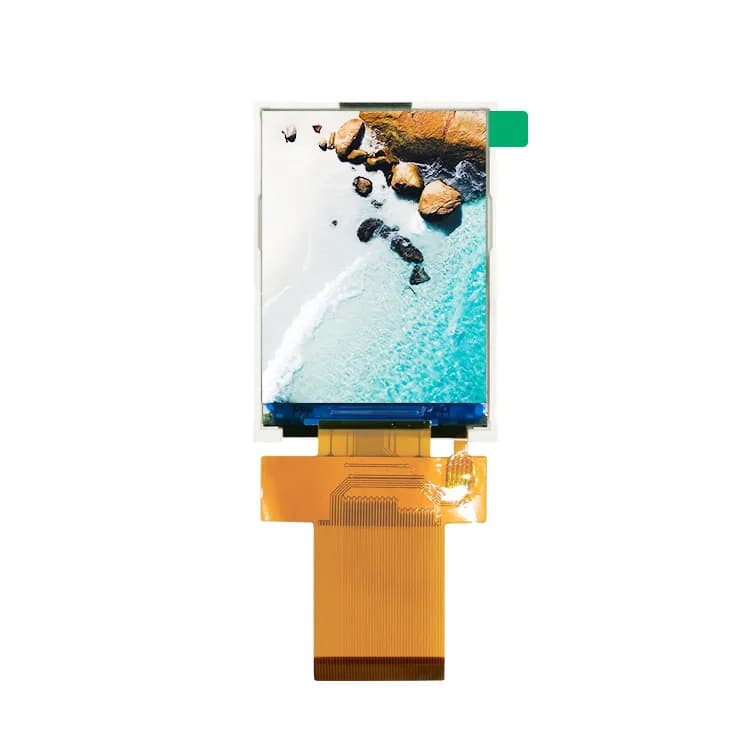
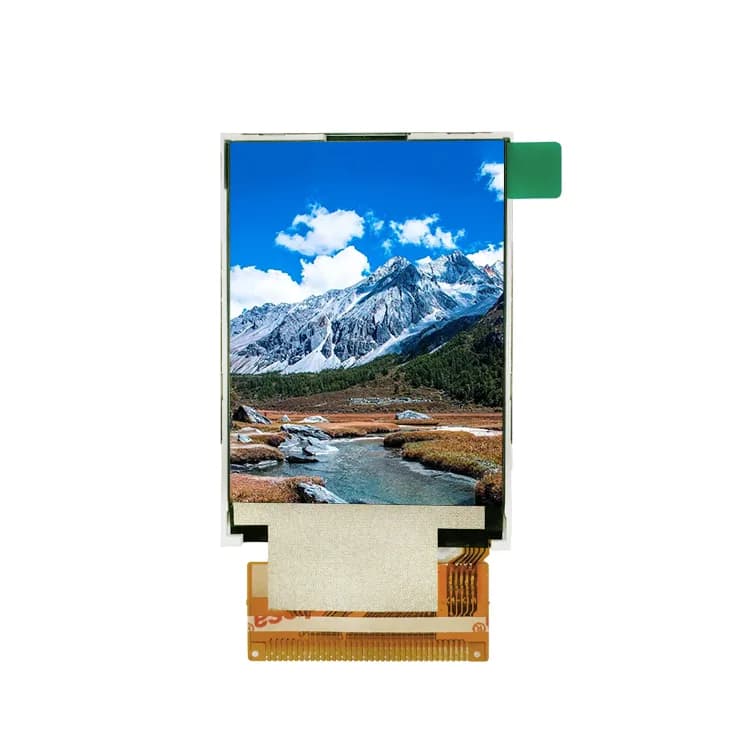
Prototyped on the ESP32-2432S024? These modules from our direct factories share the panel size and resolution, come with a datasheet and a fixed driver IC per production lot, and are available from 1 pc samples. MOQ and lead time are agreed per project.
From ESP32-2432S024 prototype to production
Dev boards are ideal for proving a UI, but their panels are bought on the open market: the controller can change between batches (as it already has on this board), there is rarely a datasheet, and lifetime is not guaranteed. For a product, specify a module with a fixed driver IC per production lot, a datasheet and a lifecycle commitment.
Our direct factories build modules with the same 2.4″ 240×320 format. Samples start at 1 pc; MOQ and lead time are agreed per project with our sales team.
Before you debug code
- Confirm which revision you have (table above): driver IC changes are the most common cause of a white screen.
- Check the backlight pin is not reused in your sketch.
- Change one setting at a time (driver, inversion, colour order), and keep a known-good example to compare against.
Configuration examples
#define ILI9341_2_DRIVER
#define TFT_WIDTH  240
#define TFT_HEIGHT 320
#define TFT_MISO 12
#define TFT_MOSI 13
#define TFT_SCLK 14
#define TFT_CS   15
#define TFT_DC    2
#define TFT_RST  -1
#define TFT_BL   27
#define TFT_BACKLIGHT_ON HIGH
#define TFT_INVERSION_OFF
#define SPI_FREQUENCY      55000000
#define SPI_READ_FREQUENCY 20000000
// the rzeldent esp_lcd config runs the same panel at 24 MHz; drop to that if the picture is unstable#define ST7789_DRIVER
#define TFT_WIDTH 240
#define TFT_HEIGHT 320
#define TFT_BL 27 // backlight is GPIO 27 in every published config for this board#define TOUCH_CS 33
#define TOUCH_SCLK 14
#define TOUCH_MOSI 13
#define TOUCH_MISO 12
#define TOUCH_IRQ 36
#define SPI_TOUCH_FREQUENCY 2500000#define TOUCH_SDA 33
#define TOUCH_SCL 32
#define TOUCH_RST 25
#define TOUCH_INT 21
#define TOUCH_I2C_ADDR 0x15 // openHASP notes "or 0x14"
#define TOUCH_I2C_FREQ 400000
// rzeldent uses the CST816S driver, openHASP the CST820 driverGuides & comparisons
CST816S Touch Not Working? I2C Scan, Chip ID, Interrupt and Sleep Fixes
A step-by-step checklist for a CST816S capacitive touch controller that isn't found on I2C, fails at start-up, gives no touch events or reports the wrong coordinates, with the settings for ESPHome, ESP-IDF, Arduino and Linux.
TroubleshootingILI9341 vs ST7789: How to Tell Which Controller Your Display Has
Boards sold under the same name ship with ILI9341 or ST7789 controllers. Identify yours in minutes by symptoms or by reading the ID register, then apply the settings that fix white screens and wrong colours.
Frequently asked questions
Is the ESP32-2432S024 the same as the CYD?
It belongs to the same Sunton family but has a 2.4-inch panel and is not pin-compatible in software with the 2.8-inch CYD. Published configs put the backlight on GPIO 27 instead of 21, and the touch wiring is different.
What do the N, R and C suffixes mean?
N has no touch panel, R has resistive touch (XPT2046) and C has capacitive touch.
Which touch controller does the ESP32-2432S024C use?
Published configs disagree on the name: the rzeldent board definition uses a CST816S driver and openHASP uses a CST820 driver. Both use I2C address 0x15 on SDA 33 and SCL 32, with reset on GPIO 25 and interrupt on GPIO 21.
Why does touch not work with my 2.8-inch CYD code on the R version?
On the 2.8-inch CYD the XPT2046 has its own SPI pins (25, 32, 33, 39). On the ESP32-2432S024R it shares the display bus (MOSI 13, MISO 12, SCLK 14) and only has its own chip select on GPIO 33, with the interrupt on GPIO 36. Point the touch library at the display's SPI bus and set the touch chip select to 33.
How fast can the SPI clock run?
Published configurations differ: the rzeldent board definition uses 24 MHz, while openHASP and the CYD repository's Variants page use 55 MHz. Start at 24 MHz and raise it once the picture is stable. A full 240×320 RGB565 frame is 153,600 bytes.
Does the ESP32-2432S024 have PSRAM?
No. Board configs describe an ESP32-WROOM module with 4 MB of flash and no PSRAM. The rzeldent definition allocates an LVGL draw buffer of a quarter of the screen (19,200 pixels) in internal RAM rather than a full frame buffer.
Sources
- rzeldent/platformio-espressif32-sunton, esp32-2432S024C.json (commit e49cbfed)
- rzeldent/platformio-espressif32-sunton, esp32-2432S024R.json (commit e49cbfed)
- rzeldent/platformio-espressif32-sunton, esp32-2432S024N.json (commit e49cbfed)
- openHASP, user_setups/esp32/esp32-2432s024.ini (commit c4fb5a78)
- witnessmenow/ESP32-Cheap-Yellow-Display, Variants/README.md (commit a744659e)
- witnessmenow/ESP32-Cheap-Yellow-Display, PINS.md (2.8″ CYD pin map, for comparison)
- F1ATB: ESP32-2432S028 / S024 configurations (page offline when checked on 2026-11-16)
Not sure which display fits your design?
Send us your size, interface and host processor. A display engineer replies within 12 hours with 2–3 options, datasheets and init code. Samples from 1 pc.