Sunlight Readable Displays
High-brightness TFT LCDs with optical bonding for outdoor and semi-outdoor use.
3 matching display modules
Refine in Display Finder →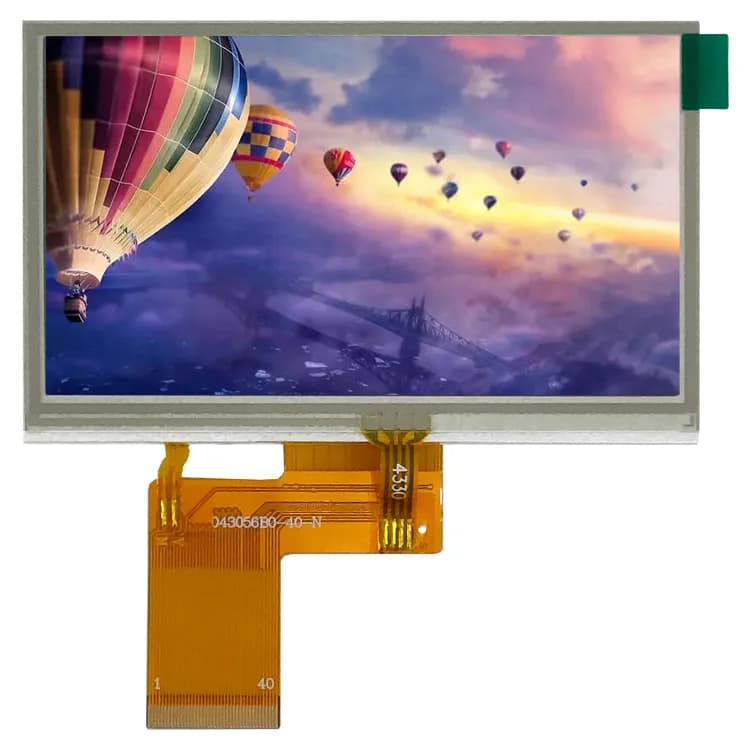
4.3" 800×480 IPS TFT LCD, RGB (PJ4303H03-25H40P1000)
- Size
- 4.3"
- Resolution
- 800×480
- Brightness
- 1000 nits
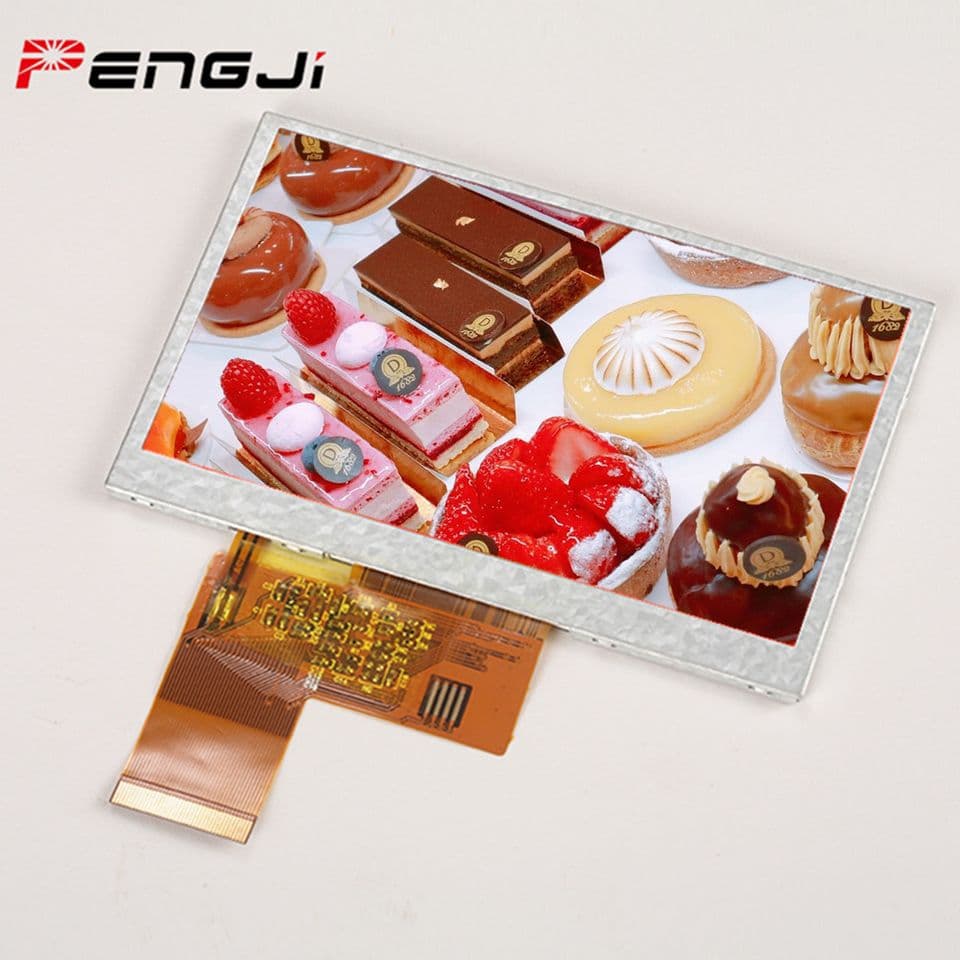
4.3" 480×272 TFT LCD, RGB (PJ4301I07-29H40P1050)
- Size
- 4.3"
- Resolution
- 480×272
- Brightness
- 1050 nits
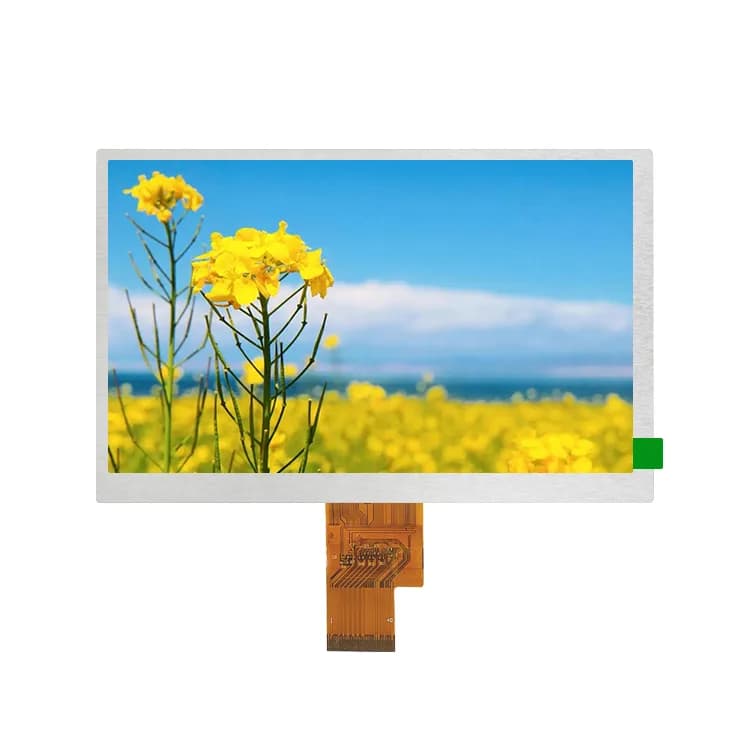
7" 800×480 IPS TFT LCD, RGB (PJ7004I38-57H40P1000)
- Size
- 7"
- Resolution
- 800×480
- Brightness
- 1000 nits
More standard models (17)
Full catalog →From our direct factories’ product tables. Datasheets and samples on request.
| Model | Size | Resolution | Interface | Brightness (cd/m²) | FPC pins | Viewing | Touch | Outline (mm) | |
|---|---|---|---|---|---|---|---|---|---|
| PJ350P15H42-200P54N PengJi | 3.5″ | 320×240 | RGB (parallel) | 200-1000 | 54 | 12 o'clock | Optional | 77.9 × 64.6 × 4.25 | Request datasheet |
| PJ3502B01-32H54P400 PengJi | 3.5″ | 320×240 | RGB (parallel) | 200-1000 | 54 | All (IPS-type) | Optional | 77.9 × 64.6 × 4.25 | Full specs → |
| PJ4004H01-22H40P400 PengJi | 4″ | 480×480 | SPI / RGB (parallel) | 400-800 | 40 | All (IPS-type) | — | 78.4 × 78.4 × 2.17 | Request datasheet |
| PJ4001B01-21H40P450 PengJi | 4″ | 480×800 | RGB (parallel) | 400-800 | 40 | All (IPS-type) | — | 96.85 × 57.14 × 2.1 | Request datasheet |
| PJ4304I04-29H40P150 PengJi | 4.3″ | 480×272 | RGB (parallel) | 200-1200 | 40 | 6 o'clock | Optional | 105.50 × 67.20 × 2.90 | Full specs → |
| PJ4301H01-29H40P500 PengJi | 4.3″ | 480×272 | RGB (parallel) | 200-1200 | 40 | All (IPS-type) | Optional | 105.50 × 67.20 × 2.90 | Full specs → |
| PJT500H10H31-200P40N PengJi | 5″ | 480×272 | RGB (parallel) | 200-1200 | 40 | 6 o'clock | Optional | 120.7 × 75.8 × 3.10 | Request datasheet |
| PJT500C01H29-200P40N PengJi | 5″ | 800×480 | RGB (parallel) | 200-1200 | 40 | 6 o'clock | Optional | 120.90 × 75.95 × 2.90 | Request datasheet |
| PJ5001H15-31H40P300 PengJi | 5″ | 800×480 | RGB (parallel) | 200-1200 | 40 | All (IPS-type) | Optional | 120.90 × 75.95 × 2.90 | Request datasheet |
| PJ5501X01-16H39P500 PengJi | 5.5″ | 1080×1920 | MIPI DSI | 600-1000 | 39 | All (IPS-type) | Optional | 64.3 × 118.2 × 1.55 | Request datasheet |
| PJ6201H01-40H40P500 PengJi | 6.2″ | 800×480 | RGB (parallel) | 300-800 | 40 | 6 o'clock | Optional | 155.22 × 88.22 × 5.0 | Request datasheet |
| PJT900P01H57-400P50N PengJi | 9″ | 800×480 | RGB (parallel) | 200-800 | 50 | 6 o'clock | Optional | 210.7 × 126.4 × 5.7 | Request datasheet |
| PJT101P02H28-600P40N PengJi | 10.1″ | 1280×800 | LVDS | 200-800 | 50 | All (IPS-type) | Optional | 227.56 × 148.2 × 2.5 | Request datasheet |
| PJT104H01-500P60N PengJi | 10.4″ | 1024×768 | LVDS | 200-800 | 60 | 6 o'clock | Optional | 236 × 174.3 × 7.4 | Request datasheet |
| PJ11601X01-24H30P350 PengJi | 11.6″ | 1920×1080 | eDP | 200-800 | 30 | All (IPS-type) | Optional | 263.4 × 157.22 × 2.41 | Request datasheet |
| PJT133B01H26-250P40N PengJi | 13.3″ | 1920×1080 | eDP | 200-800 | 40 | All (IPS-type) | Optional | 306.22 × 177.66 × 2.73 | Request datasheet |
| PJ31501E01-14H30P1000 PengJi | 31.5″ | 1920×1080 | LVDS | 1000 | 30 | All (IPS-type) | — | 714 × 411 × 1.4 | Request datasheet |
Brightness alone is not enough
Readability outdoors depends on contrast under ambient light, not just nits. Sunlight reflected from the cover glass and the air gap behind it adds to the black level. Once reflections exceed a few percent of the display’s own light, the image looks washed out.
The three levers
- Luminance: 1000–1500 nits for direct sun, achieved with high-efficiency LED backlights.
- Optical bonding: filling the air gap with optical adhesive removes two reflective surfaces and typically cuts reflectance several-fold. See optical bonding.
- Anti-reflective / anti-glare cover glass: an AR coating reduces front-surface reflection from about 4% to below 1%.
Heat and lifetime
A 1000-nit backlight draws several times the power of a 300-nit one. Design for it:
- Use an ambient light sensor to dim at night and in shade; this saves power and LED life.
- Provide a thermal path from the backlight frame to the enclosure.
- Choose a panel with a high clearing point (Tni) liquid crystal so the screen does not go black when the sun heats it.
Typical applications
EV chargers, parking and ticket machines, marine and agricultural equipment, outdoor kiosks and handheld field instruments.
Read the full guide: how bright does a sunlight-readable display need to be?
Frequently asked questions
How many nits is sunlight readable?
For direct sunlight, aim for 1000 nits or more combined with optical bonding and an anti-reflective cover. Around 700 nits can be enough in shade or behind a canopy.
What is the difference between sunlight readable and high brightness?
High brightness only describes luminance. Sunlight readable describes the whole optical stack (brightness, bonding, AR coating and high-Tni liquid crystal) that keeps contrast visible outdoors.
Does a high-brightness display overheat in the sun?
It can if the design ignores heat. Use a high-Tni panel, a thermal path for the backlight and ambient-light dimming to keep the panel within its operating range.
Not sure which display fits your design?
Send us your size, interface and host processor. A display engineer replies within 12 hours with 2–3 options, datasheets and init code. Samples from 1 pc.