LVDS TFT Displays
Robust differential displays for industrial 7″–15.6″ designs.
4 matching display modules
Refine in Display Finder →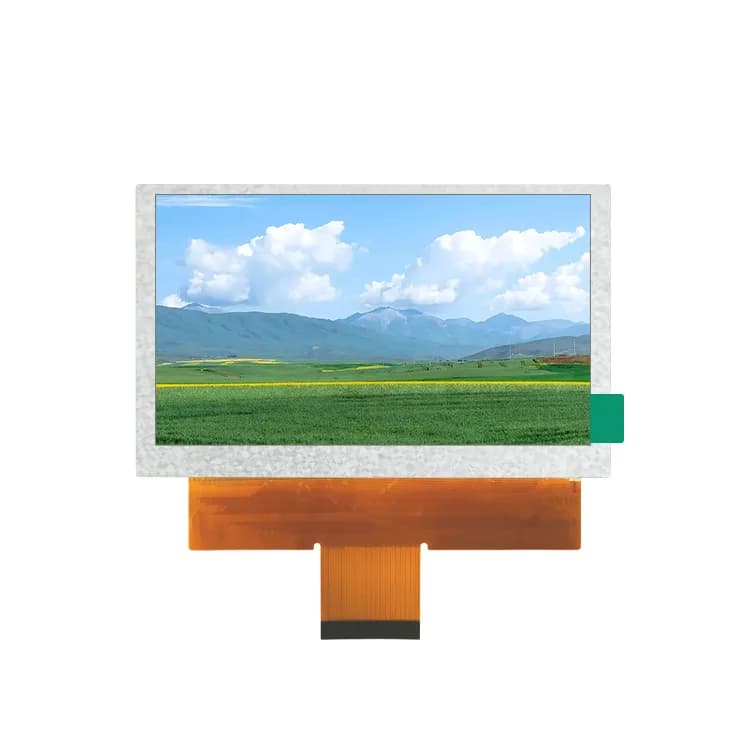
5.8" 1920×1080 TFT LCD, LVDS (PJ5801G02-57H60P400)
- Size
- 5.8"
- Resolution
- 1920×1080
- Brightness
- 400 nits
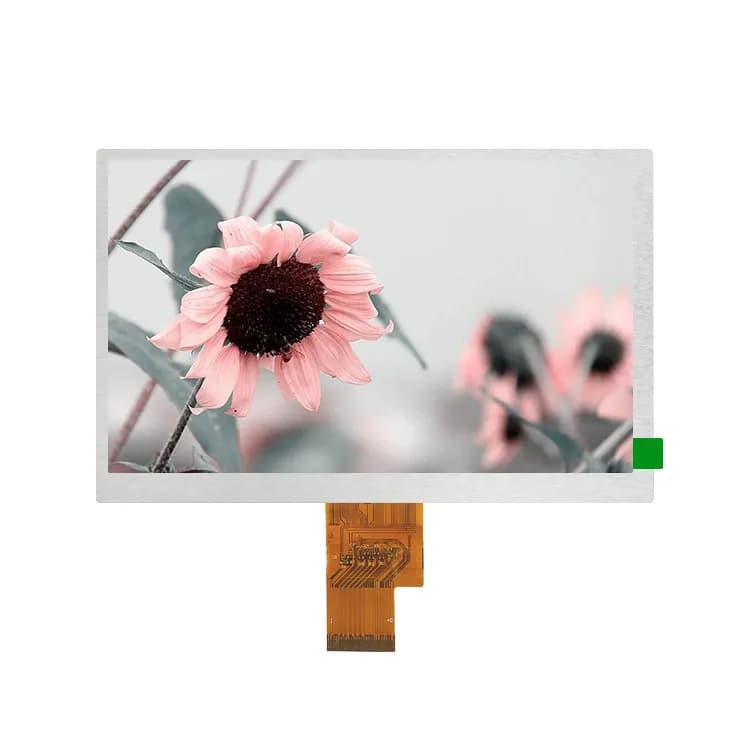
7" 1024×600 TFT LCD, LVDS (PJ7005I07-28H40P300)
- Size
- 7"
- Resolution
- 1024×600
- Brightness
- 300 nits
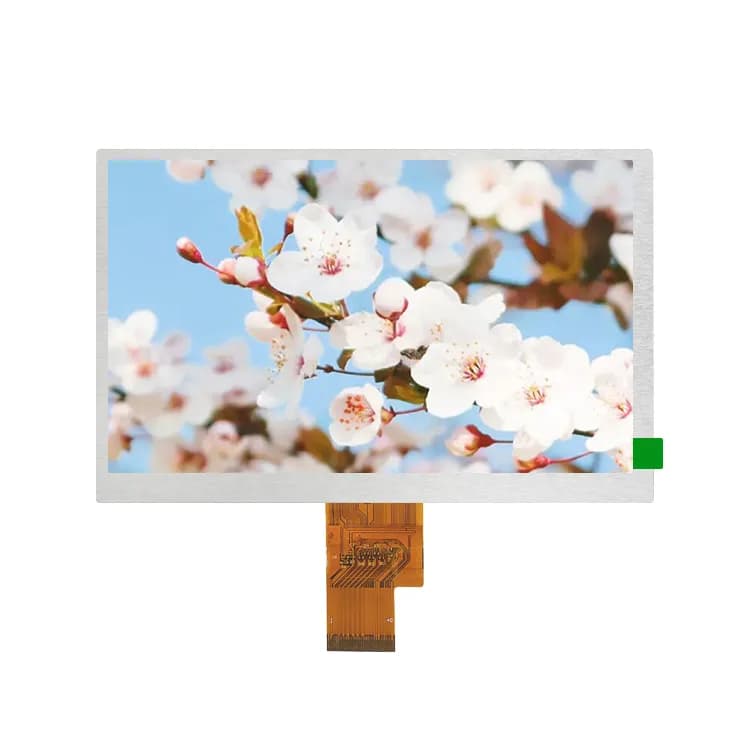
7" 1024×600 TFT LCD, LVDS (PJ7005I07-44H40P250C)
- Size
- 7"
- Resolution
- 1024×600
- Brightness
- 250 nits
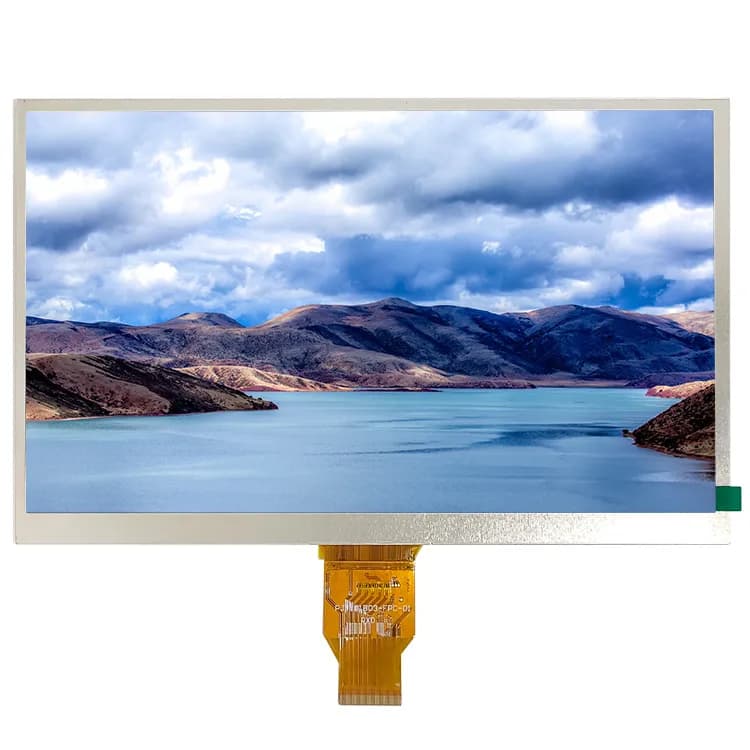
10.1" 1024×600 TFT LCD, LVDS (PJ10101B14-28H40P400)
- Size
- 10.1"
- Resolution
- 1024×600
- Brightness
- 400 nits
More standard models (21)
Full catalog →From our direct factories’ product tables. Datasheets and samples on request.
| Model | Size | Resolution | Interface | Brightness (cd/m²) | FPC pins | Viewing | Touch | Outline (mm) | |
|---|---|---|---|---|---|---|---|---|---|
| PJ4307B03-46H30P200C PengJi | 4.3″ | 1280×720 | LVDS | 200-600 | 30 | All (IPS-type) | Optional | 105.5 × 67.2 × 2.9 | Request datasheet |
| PJ5801G04-57H60P40 PengJi | 5.8″ | 1920×1200 | LVDS | 400 | 60 | 12 o'clock | — | 145.33 × 89.3 × 5.7 | Request datasheet |
| PJ5801G01-57H60P400 PengJi | 5.8″ | 1280×768 | LVDS | 400 | 60 | 12 o'clock | — | 145.33 × 89.3 × 5.7 | Request datasheet |
| PJT700C19H23-200P40N PengJi | 7″ | 800×1280 | LVDS | 200-600 | 40 | All (IPS-type) | Optional | 99.9 × 155.42 | Request datasheet |
| PJ7005I06-28H40P300 PengJi | 7″ | 1024×600 | LVDS | 200-500 | 40 | 6 o'clock | Optional | 165.75 × 105.39 × 3.4/2.8 | Request datasheet |
| PJT800P01H26-250P40N PengJi | 8″ | 1024×768 | LVDS | 200-600 | 40 | 6 o'clock | Optional | 174 × 136 × 2.45 | Request datasheet |
| PJ8002C01-64H40P450 PengJi | 8″ | 1024×600 | LVDS | 450 | 40 | 6 o'clock | Optional | 192.8 × 116.6 × 6.4 | Request datasheet |
| PJT900C01H57-200P40N PengJi | 9″ | 1024×600 | LVDS | 200-600 | 40 | 6 o'clock | Optional | 210.1 × 126.5 × 5.7 | Request datasheet |
| PJT9005H01-50H40P450 PengJi | 9″ | 1024×600 | LVDS | 400-450 | 40 | All (IPS-type) | Optional | 210.7 × 126.5 × 5.0 | Request datasheet |
| B1097XN01/B1097XN02 PengJi | 9.7″ | 1024×768 | LVDS | 200 | 30 | All (IPS-type) | Optional | 205.808 × 58.06 | Request datasheet |
| PJT101P02H28-600P40N PengJi | 10.1″ | 1280×800 | LVDS | 200-800 | 50 | All (IPS-type) | Optional | 227.56 × 148.2 × 2.5 | Request datasheet |
| PJT104H01-500P60N PengJi | 10.4″ | 1024×768 | LVDS | 200-800 | 60 | 6 o'clock | Optional | 236 × 174.3 × 7.4 | Request datasheet |
| PJM121GNX2R1 PengJi | 12.1″ | 1024×768 | LVDS | 400 | 20 | 6 o'clock | Optional | 279.0 × 209.0 × 900 | Request datasheet |
| PJ12301H02-76H40P700 PengJi | 12.3″ | 1920×720 | LVDS | 700 | 40 | All (IPS-type) | — | 308.1 × 130 × 7.6 | Request datasheet |
| PJTM150TDS50 PengJi | 15″ | 1024×768 | LVDS | 400 | 20 | 6 o'clock | Optional | 326.5 × 253.5 × 11.8 | Request datasheet |
| PJG170ETN01 PengJi | 17″ | 1280×1024 | LVDS | 450 | 30 | 6 o'clock | Optional | 385.5 × 296.5 × 18 | Request datasheet |
| P0J18501B01-95H30P600 PengJi | 18.5″ | 1366×768 | LVDS | 600 | 30 | All (IPS-type) | — | 431 × 255 × 9.5 | Request datasheet |
| PJ21502B02-10H30P500 PengJi | 21.5″ | 1920×1080 | LVDS | 500 | 30 | All (IPS-type) | — | 495.6 × 292.3 × 10.1 | Request datasheet |
| PJ23801B01-11H30P250 PengJi | 23.8″ | 1920×1080 | LVDS | 250 | 30 | All (IPS-type) | — | 543 × 317.4 × 11.1 | Request datasheet |
| PJ31501E02-11H30P300 PengJi | 31.5″ | 1920×1080 | LVDS | 300 | 30 | All (IPS-type) | — | 714 × 411 × 1.4 | Request datasheet |
| PJ31501E01-14H30P1000 PengJi | 31.5″ | 1920×1080 | LVDS | 1000 | 30 | All (IPS-type) | — | 714 × 411 × 1.4 | Request datasheet |
Why industrial products still use LVDS
LVDS (FPD-Link) is differential, low-swing and well understood. It survives long internal cables, motors and switching power supplies better than parallel RGB or MIPI. Panels need no command-mode init: correct timing is enough.
Single vs dual channel
Mode | Pairs | Practical max |
|---|---|---|
Single, 6-bit | 3 data + 1 clock | 1280×800 (18-bit colour) |
Single, 8-bit | 4 data + 1 clock | 1366×768 |
Dual, 8-bit | 8 data + 2 clock | 1920×1080 |
The mapping trap: VESA vs JEIDA
8-bit LVDS has two bit mappings. If colours look wrong (for example skin tones turn green or the image is posterised), the panel and host disagree on VESA vs JEIDA mapping. It is a one-line setting in most device trees and controller boards.
Replacing an EOL LVDS panel
Many legacy industrial panels are 7″ 800×480 or 10.4″/12.1″ LVDS. When one goes end-of-life, match in this order: active area, resolution, LVDS format (6/8-bit, VESA/JEIDA), connector pinout, backlight driver, and operating temperature. Use our panel replacement finder to check a part number.
Interface comparison: MIPI DSI vs LVDS vs eDP.
Frequently asked questions
What is the difference between VESA and JEIDA LVDS?
They are two ways of mapping 8-bit colour onto the LVDS pairs. A mismatch produces wrong or posterised colours. Set the host or controller board to the mapping specified in the panel datasheet.
Is LVDS obsolete?
No. Consumer devices moved to eDP and MIPI DSI, but LVDS remains the most common interface for industrial 7″–15.6″ panels because it is robust and simple to integrate.
How long can an LVDS cable be?
With good twisted-pair cable, a metre or more is common inside equipment. That is far longer than MIPI DSI or parallel RGB.
Not sure which display fits your design?
Send us your size, interface and host processor. A display engineer replies within 12 hours with 2–3 options, datasheets and init code. Samples from 1 pc.