7 Inch TFT LCD Displays
7″ is the most common HMI size. Choose between 800×480 and 1024×600, and RGB, LVDS or MIPI DSI depending on your processor.
10 matching display modules
Refine in Display Finder →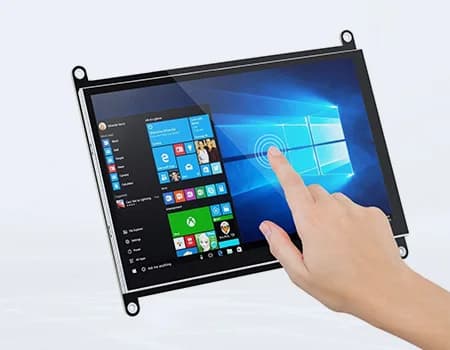
7" 800×480 Raspberry Pi display, HDMI / USB
- Size
- 7"
- Resolution
- 800×480
- Driver IC
- —
7" 800×480 TFT LCD, RGB (PJ7003I78-60H40P400C)
- Size
- 7"
- Resolution
- 800×480
- Brightness
- 400 nits
7" 1024×600 TFT LCD, LVDS (PJ7005I07-28H40P300)
- Size
- 7"
- Resolution
- 1024×600
- Brightness
- 300 nits
7" 1024×600 TFT LCD, LVDS (PJ7005I07-44H40P250C)
- Size
- 7"
- Resolution
- 1024×600
- Brightness
- 250 nits
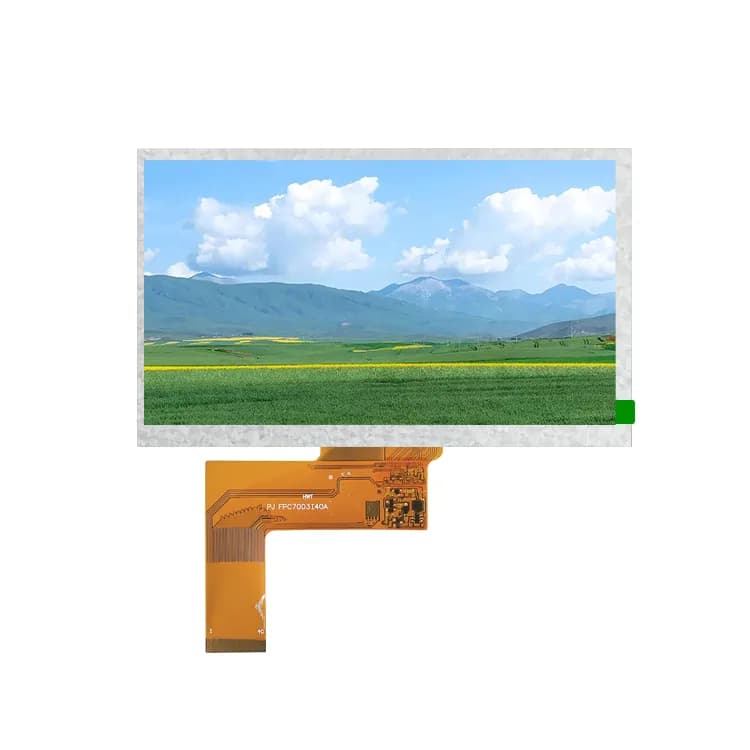
7" 800×480 TFT LCD, RGB (PJ7003I40-35H40P400)
- Size
- 7"
- Resolution
- 800×480
- Brightness
- 400 nits
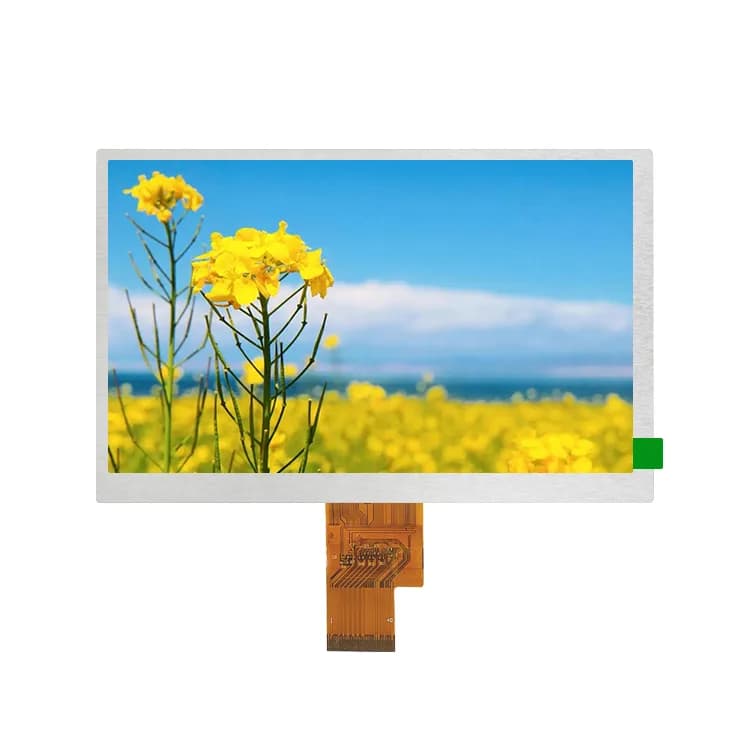
7" 800×480 IPS TFT LCD, RGB (PJ7004I38-57H40P1000)
- Size
- 7"
- Resolution
- 800×480
- Brightness
- 1000 nits
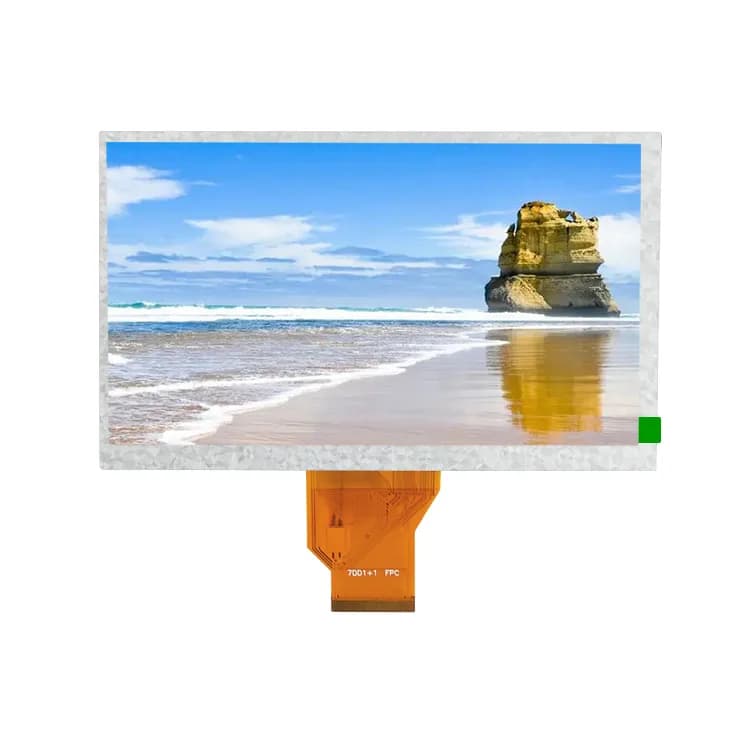
7" 800×480 TFT LCD, RGB (PJ7004I40-57H50P250)
- Size
- 7"
- Resolution
- 800×480
- Brightness
- 250 nits
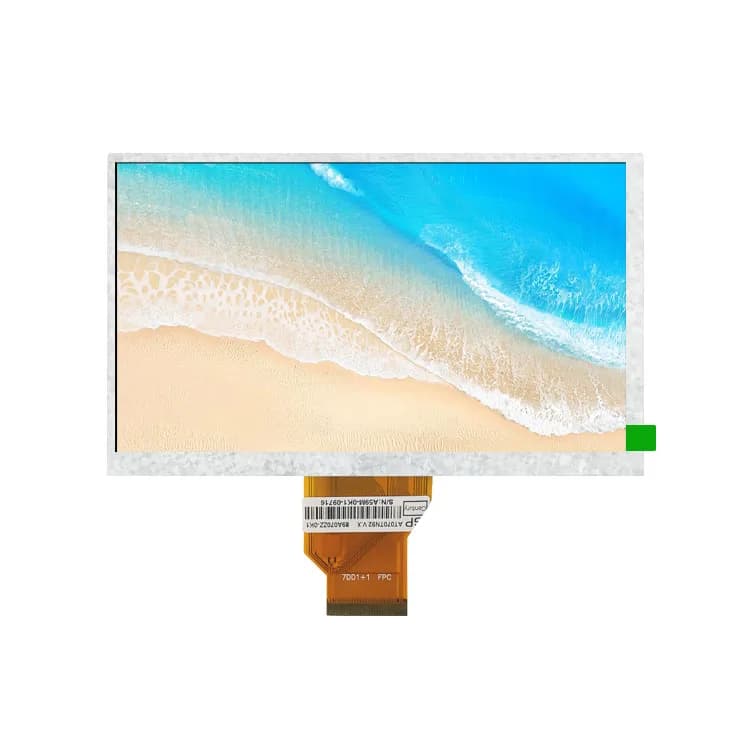
7" 800×480 TFT LCD, RGB (PJ7004I58-57H50P600)
- Size
- 7"
- Resolution
- 800×480
- Brightness
- 600 nits
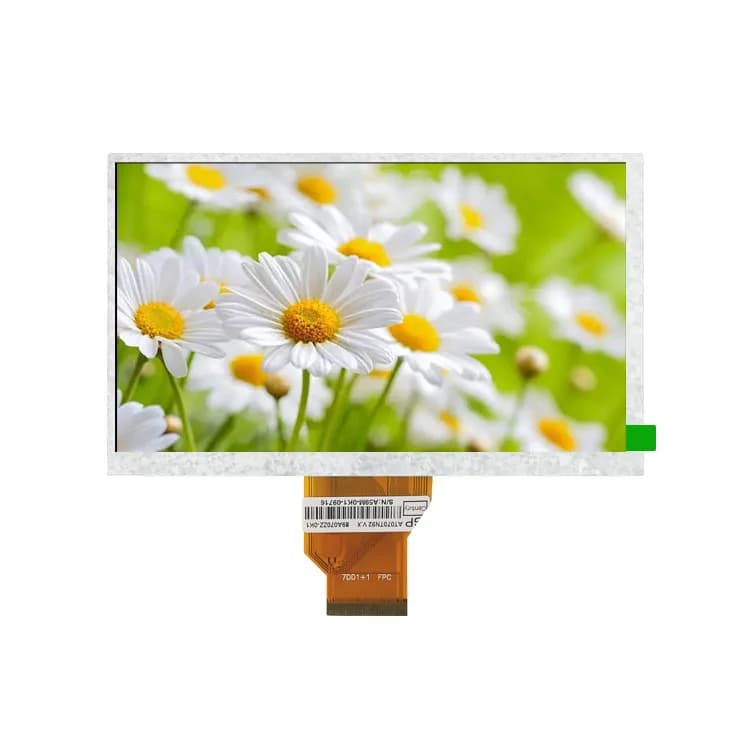
7" 800×480 TFT LCD, RGB (PJT700P94H57-400P50N)
- Size
- 7"
- Resolution
- 800×480
- Brightness
- 400 nits
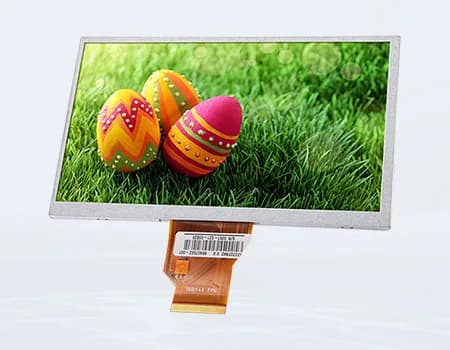
7" 800×480 TFT LCD, RGB (PJ7003I04-35H50P350)
- Size
- 7"
- Resolution
- 800×480
- Brightness
- 350 nits
More standard models (7)
Full catalog →From our direct factories’ product tables. Datasheets and samples on request.
| Model | Size | Resolution | Interface | Brightness (cd/m²) | FPC pins | Viewing | Touch | Outline (mm) | |
|---|---|---|---|---|---|---|---|---|---|
| PJT650P01H28-200P50N PengJi | 6.5″ | 800×480 | RGB (parallel) | 150-300 | 50 | 6 o'clock | Optional | 155.2 × 89.40 × 2.8 | Request datasheet |
| PJ7010H01-26H30P300 PengJi | 6.98″ | 720×1280 | MIPI DSI | 200-500 | 30 | All (IPS-type) | Optional | 91.5 × 165.91 × 2.6 | Request datasheet |
| PJT700C19H23-200P40N PengJi | 7″ | 800×1280 | LVDS | 200-600 | 40 | All (IPS-type) | Optional | 99.9 × 155.42 | Request datasheet |
| PJT700C03H35-200P50N PengJi | 7″ | 1024×600 | RGB (parallel) | 200-500 | 50 | 6 o'clock | Optional | 165.00 × 103.00 × 3.5 | Request datasheet |
| PJT700B04H35-200P60N PengJi | 7″ | 800×480 | RGB (parallel) | 200-500 | 60 | 6 o'clock | Optional | 165.0 × 104.0 × 3.5/2.8 | Request datasheet |
| PJ7014H01-24H30P400 PengJi | 7″ | 1280×800 | MIPI DSI | 200-600 | 30 | All (IPS-type) | Optional | 161.2 × 105.5 × 2.4 | Request datasheet |
| PJ7005I06-28H40P300 PengJi | 7″ | 1024×600 | LVDS | 200-500 | 40 | 6 o'clock | Optional | 165.75 × 105.39 × 3.4/2.8 | Request datasheet |
At a glance
| Interface | Best for | Typical host | Cable length |
|---|---|---|---|
| RGB | MCU HMIs | ESP32-S3, STM32 LTDC | Short (<10 cm) |
| LVDS | Industrial | RK3568, i.MX | Long, robust |
| MIPI DSI | Thin products | RK3568, RPi, i.MX8 | Short |
Which 7-inch resolution should I choose?
800×480 (WVGA) is the long-running industrial standard. It is cheap, light on memory (768 KB per frame at RGB565) and easy for MCUs such as ESP32-S3 or STM32H7 to drive over a 16-bit RGB bus.
1024×600 (WSVGA) has become the default for new designs. Text looks noticeably sharper at a normal viewing distance, and Linux/Android SoCs like RK3568 or i.MX8M drive it easily over MIPI DSI or LVDS.
1280×800 suits portrait tablets and medical or test equipment that needs dense data, but it needs a SoC rather than an MCU.
RGB, LVDS or MIPI DSI?
Pick the interface your processor already has. A bridge chip adds cost, board area and another init sequence to maintain.
- RGB parallel is right for MCUs and short internal connections. It needs 20–28 signal lines and is sensitive to cable length.
- LVDS is the safe choice for industrial enclosures. It is differential, tolerant of longer FPC or cable runs, and most legacy 7″ panels use it, which makes replacements easier.
- MIPI DSI uses the fewest pins and suits thin products, but every panel needs its own init sequence in the device tree.
Indoor or outdoor?
A 400–500 nit IPS panel is fine indoors. Behind a window or outdoors, plan for 1000 nits and optical bonding; otherwise reflections wash out contrast. See sunlight readable displays and our guide on how bright a sunlight-readable display needs to be.
Touch
Most 7″ designs now use projected capacitive touch with a GT911-class controller over I2C. Choose resistive only for gloved use without glove-mode tuning, or when the panel must work with a stylus in wet conditions.
Frequently asked questions
What is the most common 7-inch display resolution?
800×480 is still the most common industrial resolution, but 1024×600 has become the default for new HMI designs because text is noticeably sharper at little extra cost.
Can ESP32-S3 drive a 7-inch display?
Yes, an 800×480 RGB panel works well with octal PSRAM. 1024×600 is possible but leaves less memory bandwidth for Wi-Fi and the UI; for 1024×600 and above, a Linux SoC with MIPI DSI or LVDS is more comfortable.
What brightness do I need for a 7-inch outdoor display?
Plan for 1000 nits or more with optical bonding and an anti-reflective cover glass. Without bonding, even a bright panel can be hard to read in direct sun.
Not sure which display fits your design?
Send us your size, interface and host processor. A display engineer replies within 12 hours with 2–3 options, datasheets and init code. Samples from 1 pc.