MCU Interface TFT Displays (8080 Parallel)
8-bit and 16-bit parallel TFT modules from 1.28″ to 3.5″ with on-chip frame memory, for MCUs with an FSMC/FMC or LCD peripheral.
13 matching display modules
Refine in Display Finder →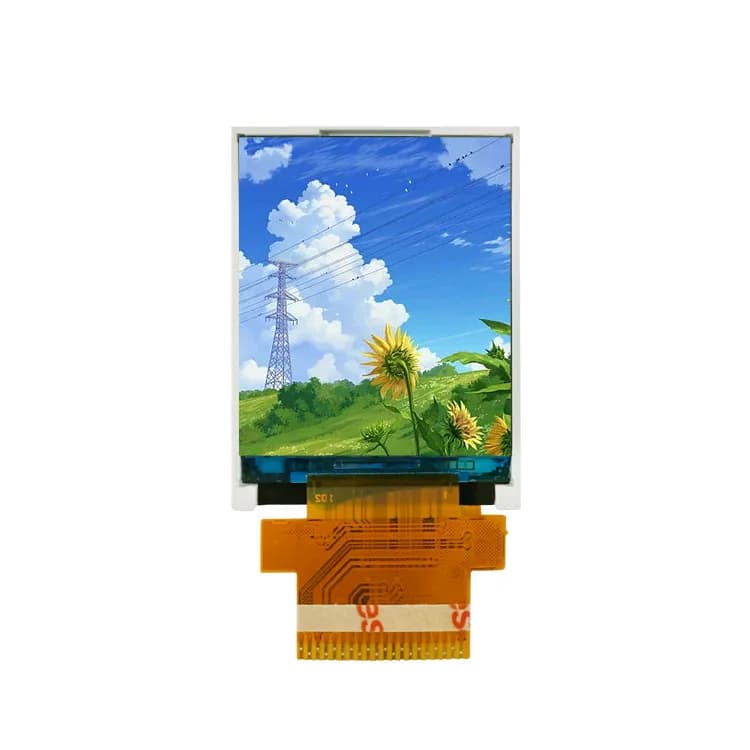
1.77" 128×160 TFT LCD, MCU (PJ177Z12)
- Size
- 1.77"
- Resolution
- 128×160
- Driver IC
- ILI9163V
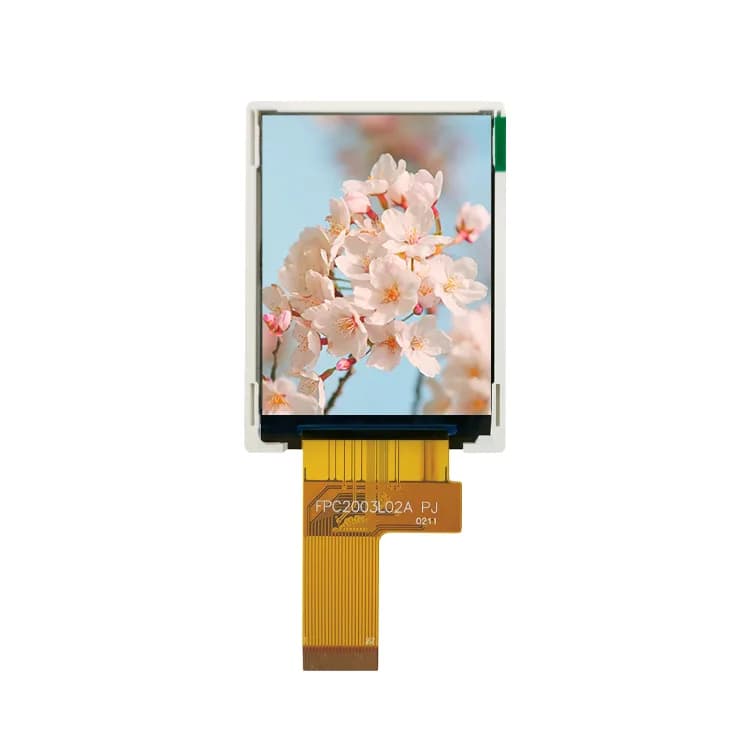
2" 240×320 TFT LCD, SPI / MCU (PJ2003L02-22H22P300)
- Size
- 2"
- Resolution
- 240×320
- Brightness
- 300 nits
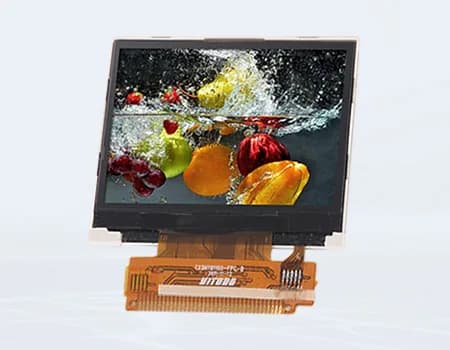
2.3" 320×240 TFT LCD, MCU (PJ2301H10-23H37P450)
- Size
- 2.3"
- Resolution
- 320×240
- Brightness
- 450 nits
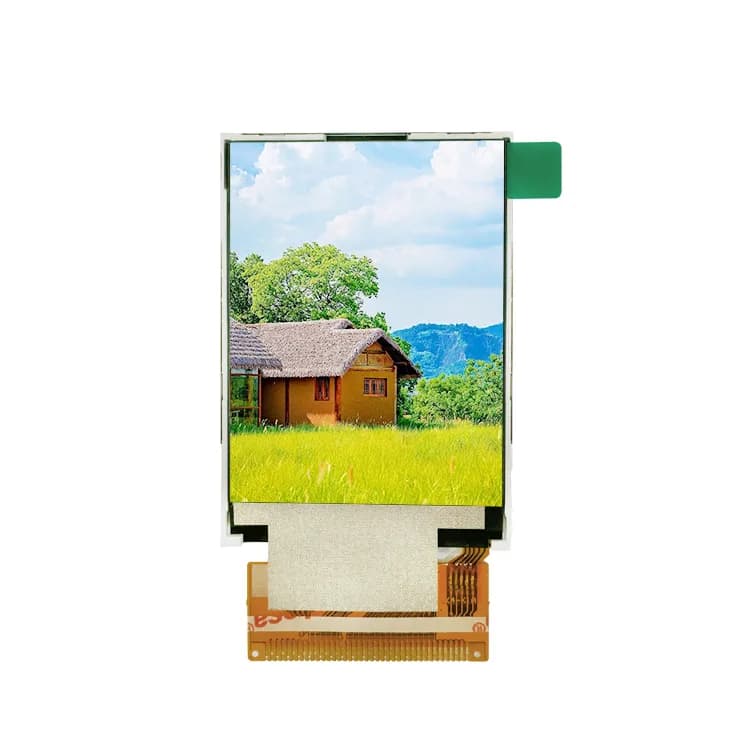
2.4" 240×320 TFT LCD, MCU (PJ2401I02-22H38P300)
- Size
- 2.4"
- Resolution
- 240×320
- Brightness
- 300 nits
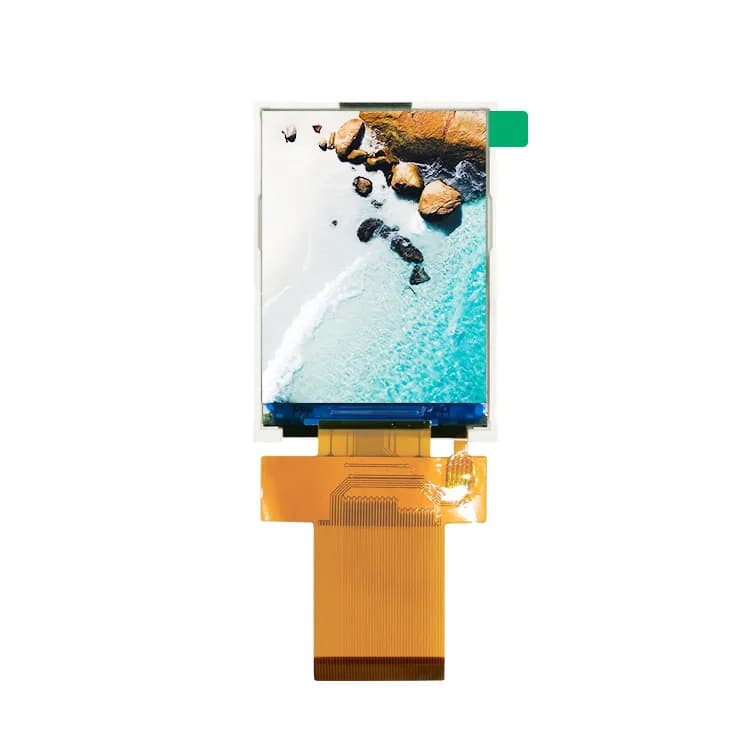
2.4" 240×320 IPS TFT LCD, SPI / MCU / RGB (PJ2401H25-22H45P200)
- Size
- 2.4"
- Resolution
- 240×320
- Brightness
- 200 nits
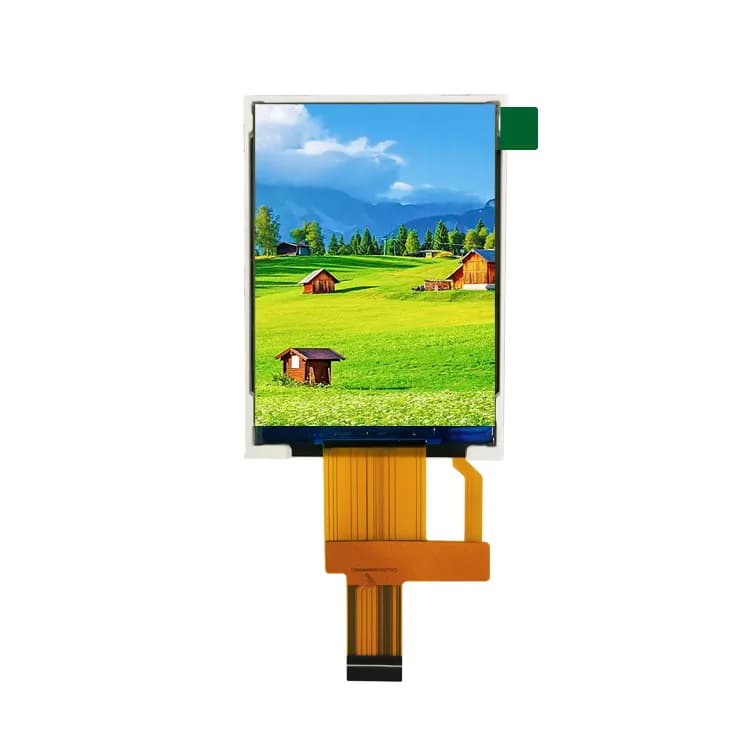
2.8" 240×320 TFT LCD, MCU (PJ2805H05-30H45P300)
- Size
- 2.8"
- Resolution
- 240×320
- Brightness
- 300 nits
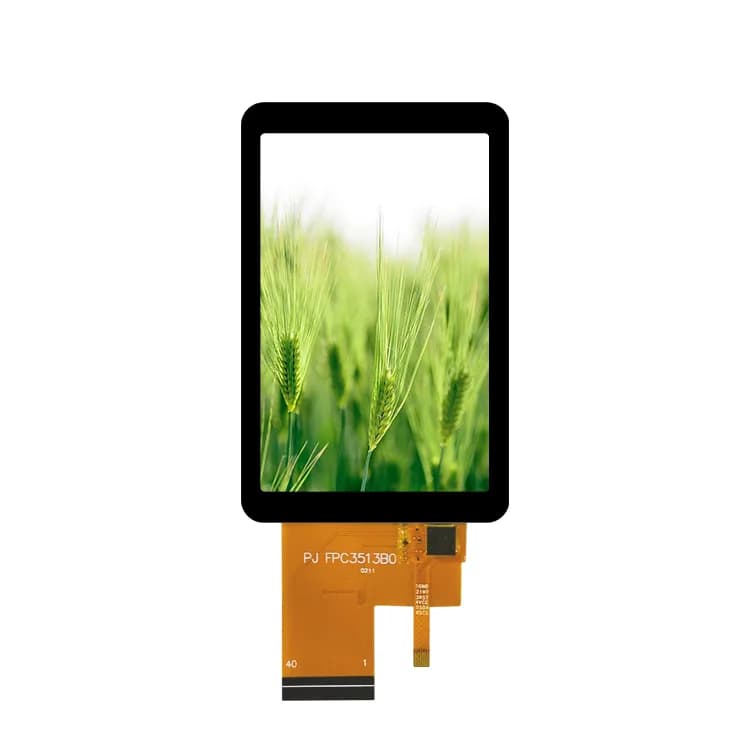
3.2" 240×320 TFT LCD, SPI / MCU / RGB (PJ3202H01-36H45P300R)
- Size
- 3.2"
- Resolution
- 240×320
- Brightness
- 300 nits
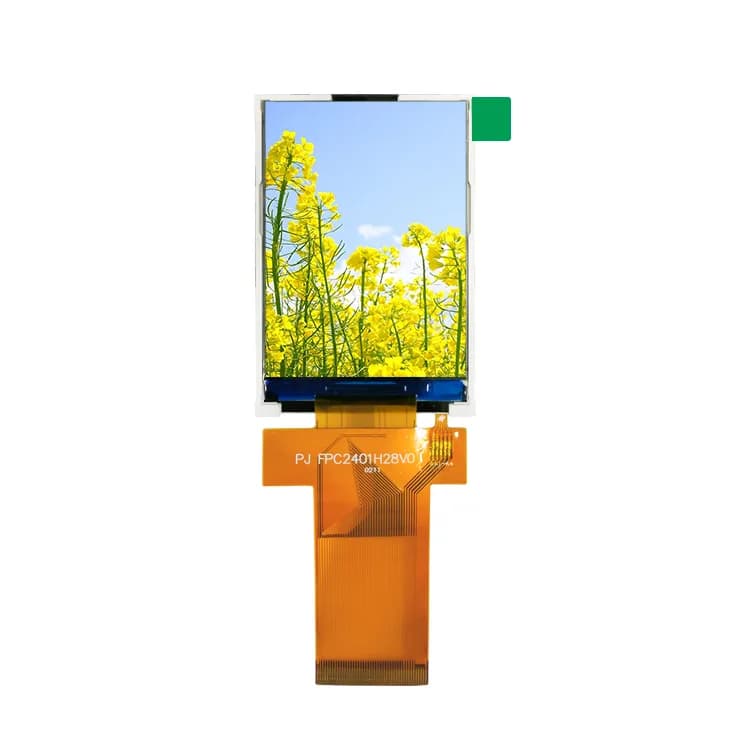
2.4" 240×320 IPS TFT LCD, SPI / MCU / RGB (PJ2401H28-22H45P200)
- Size
- 2.4"
- Resolution
- 240×320
- Brightness
- 200 nits
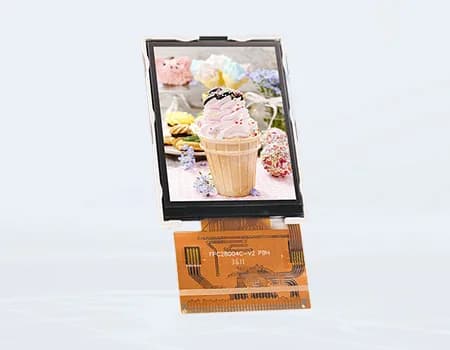
2.8" 240×400 TFT LCD, MCU (PJ2804G01-30H50P100)
- Size
- 2.8"
- Resolution
- 240×400
- Brightness
- 100 nits
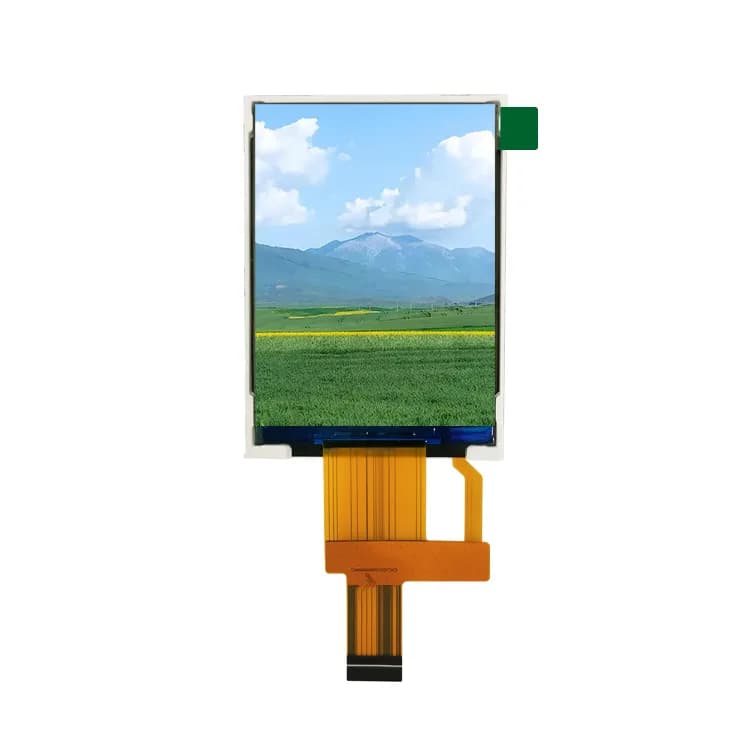
2.8" 240×320 TFT LCD, MCU (PJ2805H03-30H45P300)
- Size
- 2.8"
- Resolution
- 240×320
- Brightness
- 300 nits
2.8" 240×320 IPS TFT LCD, SPI, ILI9341, Capacitive Touch
- Size
- 2.8"
- Resolution
- 240×320
- Brightness
- 300 nits
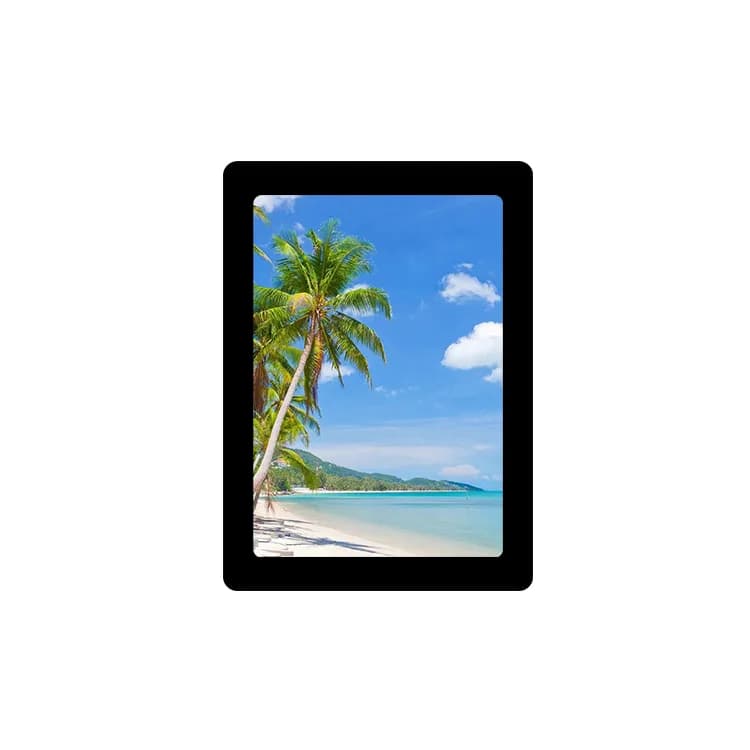
3.5" 320×480 TFT LCD, MCU (PJ3501I09-34H40P200R)
- Size
- 3.5"
- Resolution
- 320×480
- Brightness
- 200 nits
3.5" 320×480 IPS TFT LCD, SPI, ST7796S, Resistive Touch
- Size
- 3.5"
- Resolution
- 320×480
- Brightness
- 350 nits
More standard models (7)
Full catalog →From our direct factories’ product tables. Datasheets and samples on request.
| Model | Size | Resolution | Interface | Backlight options (cd/m²) | FPC pins | Viewing | Touch | Outline (mm) | |
|---|---|---|---|---|---|---|---|---|---|
| PJ01301H01-14H24P150 PengJi | 1.28″ | 240×240 | MCU (8080 parallel) | 200-400 | 24 | All (IPS-type) | Optional | 35.5 × 38.23 × 1.44 | Request datasheet |
| PJT144P04H24-150P27N PengJi | 1.44″ | 128×128 | MCU (8080 parallel) | 200-400 | 27 | 12 o'clock | Optional | 33.22 × 33.05 × 2.4 | Request datasheet |
| PJ2001I06-25H24P200 PengJi | 2″ | 176×220 | MCU (8080 parallel) | 300-500 | 20 | 12 o'clock | Optional | 37.68 × 57.30 × 2.2 | Request datasheet |
| PJT280P01H35-200P37R PengJi | 2.8″ | 240×320 | MCU (8080 parallel) | 300-500 | 37 | 6 o'clock | Optional | 50.0 × 69.2 × 2.3 | Request datasheet |
| PJT300C01H34-200P40N PengJi | 3″ | 240×400 | MCU (8080 parallel) | 300-500 | 40 | 12 o'clock | Optional | 45.04 × 77.00 × 3.40 | Request datasheet |
| PJ3201H01-25H37P200 PengJi | 3.2″ | 240×320 | MCU (8080 parallel) | 150-200 | 37 | 12 o'clock | — | 55.04 × 77.5 × 2.5 | Request datasheet |
| PJ350P04H42-200P54N PengJi | 3.5″ | 320×240 | MCU (8080 parallel) | 200 | 54 | 12 o'clock | Optional | 77.9 × 64.6 × 4.25 | Request datasheet |
A brightness range means the module can be built with different backlights. Tell us the level you need.
What an MCU interface is
"MCU interface" means a parallel bus between the host and a display controller that holds the image in its own frame memory. The host writes commands and pixels only when something changes, and the controller refreshes the panel by itself. That is the main difference from parallel RGB, where the host has to stream every frame continuously.
The bus has data lines plus four control signals: WRX (write), RDX (read), CSX (chip select) and D/CX (command or data). On controllers such as the ST7789V and ILI9341, the IM pins select the mode and bus width at the chip. On a finished module the choice is usually fixed by the FPC, so check which bus width the model you order brings out.
Bus width, pins and frame time
Both datasheets specify a 66 ns minimum write cycle on the 8080 bus. The time to send a full 240×320 RGB565 frame follows from that:
- 16-bit bus: 1 write per pixel, 76,800 writes, about 5.1 ms. Needs 16 data lines plus 4 control lines, 20 in total.
- 8-bit bus: 2 writes per pixel, 153,600 writes, about 10.1 ms. Needs 8 data lines plus 4 control lines, 12 in total.
- SPI: 1,228,800 bits. At the datasheet serial write cycle that is about 81 ms on the ST7789V (66 ns) and about 123 ms on the ILI9341 (100 ns). See the driver pages for what boards run in practice.
These are the limits of the display controller; the host's bus timing and your drawing code decide what you actually reach. Parallel is worth the extra pins when you redraw the whole screen often. For a dashboard that updates small areas, SPI is usually enough.
8080 or 6800?
The ST7789V and ILI9341 datasheets list 8080-series parallel modes (8, 9, 16 and 18-bit) and serial modes, and do not list a 6800 mode. So if your host only has a 6800-style bus, do not assume a module with one of these controllers will work. The two buses differ in their control signals: 8080 has separate write and read strobes, while 6800 uses a single read/write line with an enable strobe. Send us the host and the controller you have in mind and we will check the exact controller's datasheet.
On the host side, the ESP32-P4 LCD_CAM controller lists both I8080 and MOTO6800 formats at 8, 16 or 24 bits; see the ESP32-S3 page for its 8080 support.
Our MCU interface models
We have 11 MCU interface models with product pages, from 1.77″ to 3.5″. Most are 240×320:
- 1.77″ 128×160 with an ILI9163V
- 2.0″, 2.4″ 240×320 with an ST7789V, including 2.4″ IPS models
- 2.3″ 320×240 with an ILI9342C
- 2.8″ 240×320, and a 240×400 transflective model; see the 2.8-inch page
- 3.2″ 240×320 with an ILI9341V
- 3.5″ 320×480
Three of them (2.4″ IPS and 3.2″) also list SPI and RGB, and a 2.0″ model also lists SPI. The factory table on this page adds models from 1.28″ to 3.5″ with 8-bit or 16-bit buses, most of them available with touch. Part numbers encode the standard backlight, and other backlight levels can be built; the rest of a custom specification is agreed per project.
Frequently asked questions
What is the difference between MCU and RGB interface displays?
An MCU interface display has a controller with its own frame memory, so the host writes only what changes over a parallel bus. An RGB panel has no frame memory: the host streams every frame with a pixel clock and sync signals, and needs RAM for a full frame.
How much faster is an 8080 parallel bus than SPI?
At the ST7789V datasheet limits, a full 240×320 RGB565 frame takes about 5 ms on a 16-bit bus and 10 ms on an 8-bit bus, against about 81 ms over SPI. On the ILI9341 the SPI figure is about 123 ms.
Do ST7789V and ILI9341 support the 6800 interface?
Their datasheets list 8080-series parallel modes and serial modes, and do not list a 6800 mode. If your host needs a 6800 bus, confirm it against the datasheet of the exact controller before ordering.
Sources
Not sure which display fits your design?
Send us your size, interface and host processor. A display engineer replies within 12 hours with 2–3 options, datasheets and init code. Samples from 1 pc.